
Sagging Floors? The Problem Could Be Hiding in Your Crawl Space
A soft spot in the kitchen floor. A slight bounce when you walk across the living room. Furniture that seems to sit slightly crooked no matter how you adjust it. These small annoyances are often dismissed as quirks of an older home, but they frequently point to a problem happening out of sight, underneath the house. At Basements Love Us, we help homeowners throughout New Jersey, Eastern Pennsylvania, and Delaware trace sagging floors back to their true source, the crawl space below.
Why the Crawl Space Is Often the Real Culprit
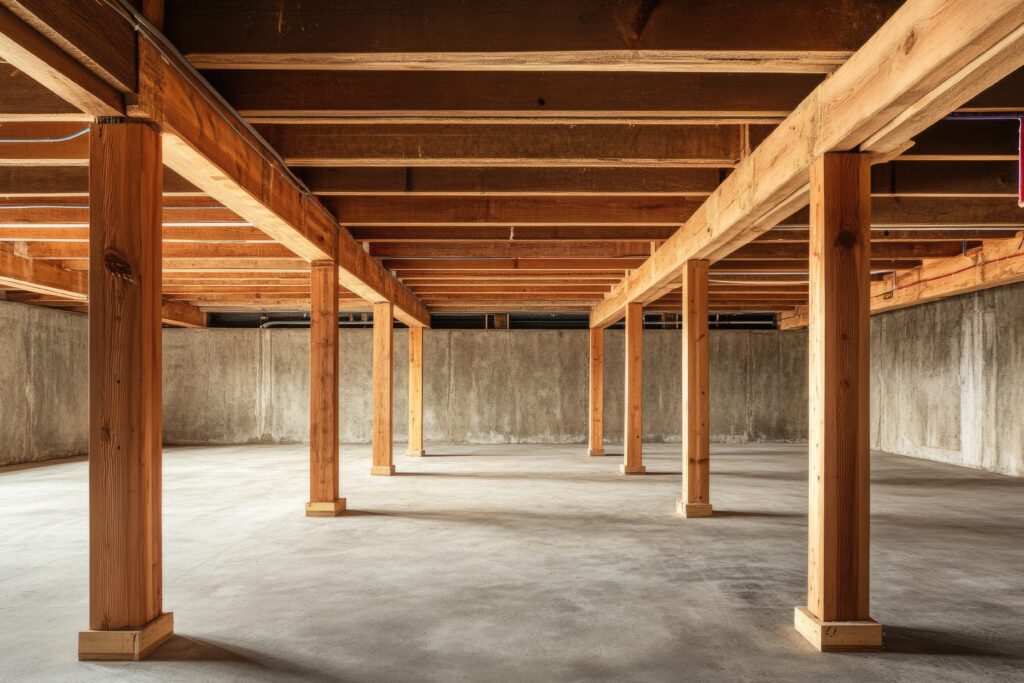
Your first floor is supported by a system of beams, floor joists, and support posts sitting inside the crawl space. When any part of that support system weakens, the floor above has nowhere to go but down.
Moisture and Wood Rot
Crawl spaces are naturally prone to dampness, especially when ventilation is poor or grading directs water toward the foundation instead of away from it. Constant moisture exposure causes wood beams and floor joists to soften and rot, losing their ability to bear weight.
Weak or Failing Support Posts
Many crawl spaces rely on wood posts or old, undersized support columns. Over time, these can shift, lean, sink into soft soil, or simply fail to carry the load they were originally designed for.
Sagging or Cracked Beams
Main support beams that span the length of the crawl space can crack, split, or sag under years of stress, particularly if they were undersized to begin with or have been weakened by moisture and pests.
How to Tell the Difference Between Cosmetic and Structural Issues
Not every uneven floor is a structural emergency, but certain signs point to a real problem beneath the surface.
• Floors that visibly slope in one direction when you place a level on them
• A noticeable bounce or springy feeling when walking across a room
• Doors and windows that have started sticking or no longer close evenly
• Visible gaps forming between the floor and baseboards
• A musty smell or visible dampness when looking into the crawl space
Why Ignoring Sagging Floors Is Risky
Sagging floors rarely fix themselves. Left alone, continued moisture exposure and structural stress usually make the problem worse, sometimes leading to more severe sagging, cracked drywall upstairs, or in extreme cases, a partial collapse of the affected framing.
How Crawl Space Repairs Typically Work
Repairing a weakened crawl space support system usually starts with identifying every affected beam, joist, and post, not just the one causing the most obvious symptom upstairs. Damaged wood may be sistered with new lumber for added strength, failing posts can be replaced with adjustable steel support jacks, and moisture sources are addressed so the repair holds up over time. Because everything in a crawl space works together as one connected system, a thorough inspection is the only way to be confident that every weak point has been found and corrected.
Crawl Space Structural Repair From Basements Love Us
Basements Love Us specializes in basement and crawl space issues, keeping your home safe with Foundation and Structural Repairs, including beam and floor joist repair, along with Waterproofing Services, Mold Services, Water Damage Restoration, Basement Masonry, Exterior Drainage, and Bilco Door and Egress Window Installation and Replacement. Our technicians inspect the entire support system to find the true source of your sagging floors.
We are licensed, insured, and every job includes a warranty. With multiple offices throughout New Jersey, Eastern Pennsylvania, and Delaware, we make expert crawl space repair accessible, and we always offer free estimates. Contact Us Today to schedule your free inspection and get your floors back on solid ground.
 We offer financing! 0% Interest, up to 60 months!