
Where Does the Water in a French Drain Go? Understanding Your Basement Waterproofing System
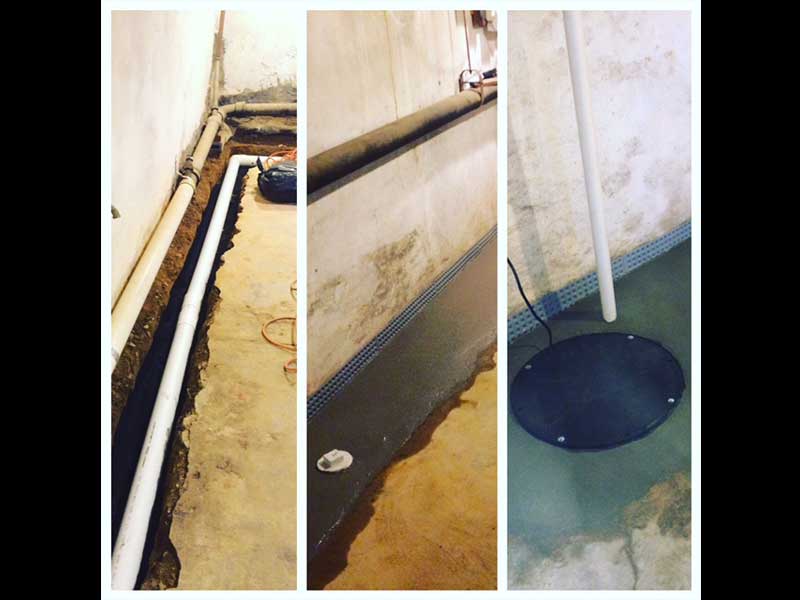 Homeowners who have had a French drain installed, or who are considering one, often ask a very reasonable question. Once the water is collected, where does it actually go? At Basements Love Us, we believe an informed homeowner is a confident homeowner, so we want to walk through exactly how water travels through a basement waterproofing system from the moment it enters until it is safely away from your home.
Starting Point: Where the Water Comes From
Before water ever reaches a French drain, it usually originates outside the home, from rainfall, melting snow, or groundwater in the surrounding soil. This water travels through the ground and puts pressure against the foundation, eventually finding its way in through small cracks, porous concrete, or the joint where the wall meets the floor.
Step One: The Interior French Drain Captures the Water
An interior French drain is typically installed along the perimeter of the basement floor, just beneath the surface. A perforated pipe surrounded by gravel sits in this trench, allowing water entering through the wall or floor joint to flow into the pipe rather than spreading across the floor.
Step Two: Water Travels to the Sump Basin
The French drain is installed with a slight slope, guiding the collected water by gravity toward the lowest point in the basement. This is where a sump basin is located, a container set into the floor designed to hold incoming water until it is ready to be removed.
Step Three: The Sump Pump Takes Over
As water accumulates in the sump basin, a float switch senses the rising level and activates the sump pump. The pump then pushes the water up and out through a discharge pipe.
Step Four: Water Exits Away From Your Home
The discharge pipe carries water outside and releases it at a safe distance from the foundation, usually directed toward a downward slope, a storm drain connection where permitted, or a designated discharge point in the yard. Proper placement of this discharge point matters greatly, since water that is released too close to the house can simply seep back down and reenter the same cycle.
Why Exterior Drainage Still Matters
An interior French drain and sump pump system handles water that has already reached your foundation, but pairing it with proper exterior grading and drainage helps reduce how much water reaches the foundation in the first place. Gutters, downspout extensions, and exterior drainage systems all play a role in directing water away from the house before it ever becomes the interior system’s job to manage.
What Can Go Wrong Without a Proper System
• Water pools against the foundation with nowhere to go, increasing hydrostatic pressure
• A discharge pipe releases water too close to the home, allowing it to cycle right back in
• An aging or undersized sump pump cannot keep pace during heavy storms
• A clogged or damaged French drain allows water to bypass the system entirely
Professional Drainage Systems From Basements Love Us
Basements Love Us specializes in basement and crawl space issues, making sure your home stays safe with Exterior Drainage and French Drain Systems, Sump Pump Installation, Waterproofing Services, Foundation and Structural Repairs, Mold Services, Water Damage Restoration, Basement Masonry, and Bilco Door and Egress Window Installation and Replacement. Our team designs every system with a clear path for water, from the moment it enters the ground to the moment it is safely discharged away from your home.
We are licensed, insured, and every job comes with a warranty. With multiple offices throughout New Jersey, Eastern Pennsylvania, and Delaware, we offer free estimates so you can understand your options with no pressure. Contact Us Today to schedule your free inspection and finally understand exactly where your basement’s water is going.
 We offer financing! 0% Interest, up to 60 months!