We offer financing! 0% Interest, up to 60 months!

Author Archive

Where Does the Water in a French Drain Go? Understanding Your Basement Waterproofing System

29th, September | Uncategorized

Where Does the Water in a French Drain Go? Understanding Your Basement Waterproofing System

French Drain & Sump Pump Company in New Jersey, Eastern Pennsylvania, and DelawareHomeowners who have had a French drain installed, or who are considering one, often ask a very reasonable question. Once the water is collected, where does it actually go? At Basements Love Us, we believe an informed homeowner is a confident homeowner, so we want to walk through exactly how water travels through a basement waterproofing system from the moment it enters until it is safely away from your home.

Starting Point: Where the Water Comes From

Before water ever reaches a French drain, it usually originates outside the home, from rainfall, melting snow, or groundwater in the surrounding soil. This water travels through the ground and puts pressure against the foundation, eventually finding its way in through small cracks, porous concrete, or the joint where the wall meets the floor.

Step One: The Interior French Drain Captures the Water

An interior French drain is typically installed along the perimeter of the basement floor, just beneath the surface. A perforated pipe surrounded by gravel sits in this trench, allowing water entering through the wall or floor joint to flow into the pipe rather than spreading across the floor.

Step Two: Water Travels to the Sump Basin

The French drain is installed with a slight slope, guiding the collected water by gravity toward the lowest point in the basement. This is where a sump basin is located, a container set into the floor designed to hold incoming water until it is ready to be removed.

Step Three: The Sump Pump Takes Over

As water accumulates in the sump basin, a float switch senses the rising level and activates the sump pump. The pump then pushes the water up and out through a discharge pipe.

Step Four: Water Exits Away From Your Home

The discharge pipe carries water outside and releases it at a safe distance from the foundation, usually directed toward a downward slope, a storm drain connection where permitted, or a designated discharge point in the yard. Proper placement of this discharge point matters greatly, since water that is released too close to the house can simply seep back down and reenter the same cycle.

Why Exterior Drainage Still Matters

An interior French drain and sump pump system handles water that has already reached your foundation, but pairing it with proper exterior grading and drainage helps reduce how much water reaches the foundation in the first place. Gutters, downspout extensions, and exterior drainage systems all play a role in directing water away from the house before it ever becomes the interior system’s job to manage.

What Can Go Wrong Without a Proper System

     • Water pools against the foundation with nowhere to go, increasing hydrostatic pressure

     • A discharge pipe releases water too close to the home, allowing it to cycle right back in

     • An aging or undersized sump pump cannot keep pace during heavy storms

     • A clogged or damaged French drain allows water to bypass the system entirely

Professional Drainage Systems From Basements Love Us

Basements Love Us specializes in basement and crawl space issues, making sure your home stays safe with Exterior Drainage and French Drain Systems, Sump Pump Installation, Waterproofing Services, Foundation and Structural Repairs, Mold Services, Water Damage Restoration, Basement Masonry, and Bilco Door and Egress Window Installation and Replacement. Our team designs every system with a clear path for water, from the moment it enters the ground to the moment it is safely discharged away from your home.

We are licensed, insured, and every job comes with a warranty. With multiple offices throughout New Jersey, Eastern Pennsylvania, and Delaware, we offer free estimates so you can understand your options with no pressure. Contact Us Today to schedule your free inspection and finally understand exactly where your basement’s water is going.

Sump Pumps and French Drains: What Are They and How Do They Work Together?

27th, September | Uncategorized

Sump Pumps and French Drains: What Are They and How Do They Work Together?

French Drain & Sump Pump Company in New Jersey, Eastern Pennsylvania, and DelawareWhen it comes to keeping a basement dry, two terms come up again and again, sump pumps and French drains. Many homeowners have heard both words but are not entirely sure what each one does, or why they are so often installed as a team. At Basements Love Us, we install complete drainage systems throughout New Jersey, Eastern Pennsylvania, and Delaware, and we want every homeowner to understand exactly how these systems protect their home.
What Is a French Drain?

A French drain is a trench containing a perforated pipe, typically surrounded by gravel, designed to collect water and redirect it away from an area before it can cause damage. In a basement waterproofing system, a French drain is usually installed along the interior perimeter of the foundation, just beneath the floor, to intercept water before it can rise up through the slab or seep through the walls.

What Is a Sump Pump?

A sump pump is a mechanical pump installed inside a small pit, called a sump basin, typically located at the lowest point of the basement floor. As water collects in the basin, a float switch triggers the pump to turn on, sending the water through a discharge pipe and out away from the home’s foundation.

How They Work Together as One System

On their own, each system solves half of the problem. A French drain is excellent at collecting water, but it needs somewhere for that water to go. A sump pump is excellent at removing water, but it needs a way to gather that water in the first place. Together, they form a complete cycle.

Step One: Collection

Water traveling through the soil around your foundation, or seeping in through basement walls and floors, is captured by the French drain running along the interior perimeter of the basement.

Step Two: Direction

The French drain channels this collected water through the perforated pipe toward the lowest point in the basement, which is where the sump basin is located.

Step Three: Removal

Once water fills the sump basin to a certain level, the sump pump activates automatically and pushes the water out through a discharge line, releasing it a safe distance away from your foundation where it will not simply flow back in.

Why This Combination Is So Effective

Relying on a French drain alone means water has nowhere productive to go once it is collected. Relying on a sump pump alone means water may still find its way through cracks and gaps in the walls before ever reaching the pump. Combining both systems creates a proactive, complete defense that intercepts water early and removes it efficiently, rather than waiting for water to already be a problem in the living space.

Signs Your Home Could Benefit From This System

     • Water regularly seeps through basement walls or the floor slab after rain

     • You have an older sump pump that runs constantly or struggles to keep up

     • Your basement has no drainage system at all and relies on hope during storms

     • You have experienced basement flooding in the past and want to prevent it from happening again

Complete Basement Drainage From Basements Love Us

Basements Love Us specializes in basement and crawl space issues, keeping your home safe with Sump Pump and French Drain Installation, along with Waterproofing Services, Foundation and Structural Repairs, Mold Services, Water Damage Restoration, Basement Masonry, Exterior Drainage, and Bilco Door and Egress Window Installation and Replacement. Our team designs each system around the specific way water moves around your home.

We are licensed, insured, and every job includes a warranty. With multiple offices throughout New Jersey, Eastern Pennsylvania, and Delaware, we offer free estimates so you can plan your project with confidence. Contact Us Today to schedule your free inspection and put an end to basement water worries for good.

Crawl Space Structural Problems: Signs Your Beams, Joists or Supports Need Repair

24th, September | Uncategorized

Crawl Space Structural Problems: Signs Your Beams, Joists or Supports Need Repair

Most homeowners rarely climb into their crawl space, which means structural problems there can go unnoticed for years. Unfortunately, the beams, joists, and support columns hidden underneath your home carry the full weight of the floor above, and when they weaken, the effects eventually show up throughout the house. At Basements Love Us, we specialize in identifying and repairing crawl space structural issues throughout New Jersey, Eastern Pennsylvania, and Delaware before they turn into major renovations.
Understanding Your Crawl Space Support System

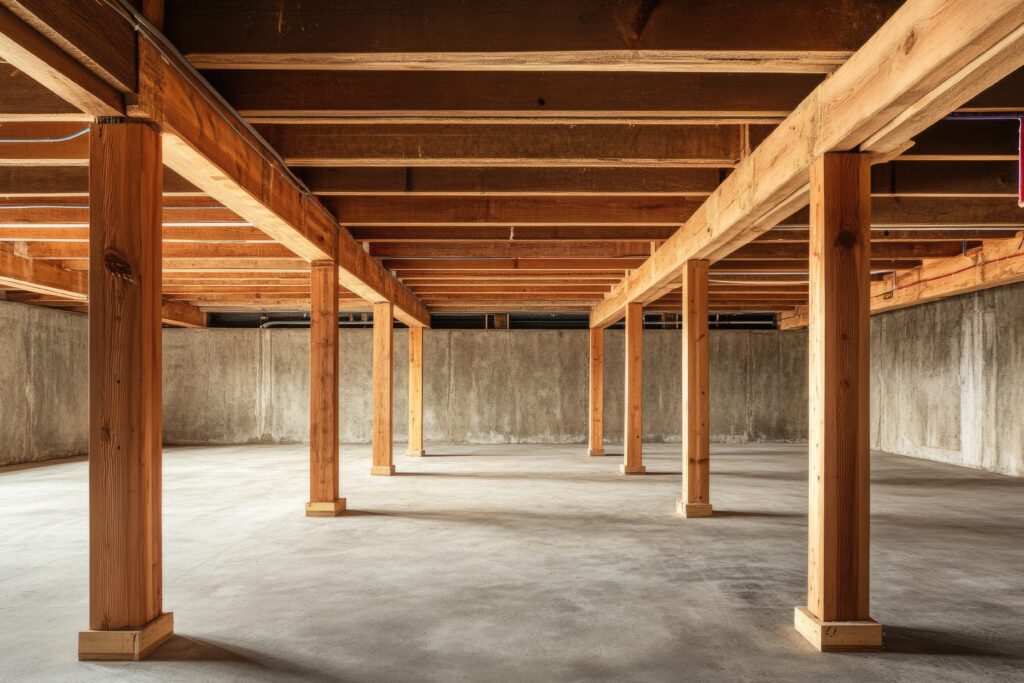
A typical crawl space includes several key structural components working together. Main beams run along the length of the space, floor joists run perpendicular across the beams to support the subfloor, and support posts or columns hold the beams up at regular intervals. When any one of these fails, the entire system is put under extra strain.


Common Signs of Crawl Space Structural Damage

Sagging or Bouncy Floors

If floors feel soft, springy, or visibly dip in certain areas, it often means the joists or beams beneath that section are no longer providing adequate support.

Visible Wood Rot or Water Staining

Discolored, soft, or crumbling wood on beams and joists is one of the clearest signs of long term moisture damage. Once wood begins to rot, it continues losing strength until it is repaired or replaced.

Cracked or Split Beams

Cracks running along the length of a support beam, or splits near where it meets a post, indicate the wood is under more stress than it can safely handle.

Leaning or Sinking Support Posts

Posts that appear tilted, sunken into the ground, or no longer making solid contact with the beam above them can no longer provide reliable support.

Gaps Between Posts and Beams

A visible gap where a support post no longer touches the beam it is meant to hold up is a clear sign of settling or failure, and should be addressed right away.

Pest Damage

Termites and other wood destroying insects thrive in damp crawl spaces. Their damage often looks like tunneling or hollowed out sections of wood, and it significantly weakens structural members.

Why Crawl Space Moisture Makes Everything Worse

Nearly every structural problem in a crawl space traces back to moisture in some way. Damp conditions encourage wood rot, attract pests, and create an environment where mold can thrive alongside the structural damage, compounding the health and safety concerns for your family.

The Value of a Full Crawl Space Evaluation

Because a crawl space is difficult to access and easy to overlook, structural problems there tend to be discovered only after they start affecting the living space above, through sagging floors, cracked tile, or sticking doors. A full evaluation of the beams, joists, and support posts, rather than a quick glance, gives homeowners a much clearer picture of the true condition of their home’s support system. This kind of thorough inspection often uncovers issues in their earliest stages, when repairs are simpler and considerably less expensive than waiting until the damage becomes visible from upstairs.

Repairing Crawl Space Structural Damage With Basements Love Us

Basements Love Us specializes in basement and crawl space issues, making sure your home stays safe through Foundation and Structural Repairs, including beam sistering, joist repair, and new support post installation, along with Waterproofing Services, Mold Services, Water Damage Restoration, Basement Masonry, Exterior Drainage, and Bilco Door and Egress Window Installation and Replacement. Our technicians address both the structural damage and the moisture source causing it.

We are licensed, insured, and back every job with a warranty. With multiple offices throughout New Jersey, Eastern Pennsylvania, and Delaware, we offer free estimates so you can get a clear, honest assessment. Contact Us Today to schedule your free inspection and protect the structural integrity of your home.

Sagging Floors? The Problem Could Be Hiding in Your Crawl Space

21st, September | Uncategorized

Sagging Floors? The Problem Could Be Hiding in Your Crawl Space

A soft spot in the kitchen floor. A slight bounce when you walk across the living room. Furniture that seems to sit slightly crooked no matter how you adjust it. These small annoyances are often dismissed as quirks of an older home, but they frequently point to a problem happening out of sight, underneath the house. At Basements Love Us, we help homeowners throughout New Jersey, Eastern Pennsylvania, and Delaware trace sagging floors back to their true source, the crawl space below.

Why the Crawl Space Is Often the Real Culprit

Your first floor is supported by a system of beams, floor joists, and support posts sitting inside the crawl space. When any part of that support system weakens, the floor above has nowhere to go but down.

Moisture and Wood Rot

Crawl spaces are naturally prone to dampness, especially when ventilation is poor or grading directs water toward the foundation instead of away from it. Constant moisture exposure causes wood beams and floor joists to soften and rot, losing their ability to bear weight.

Weak or Failing Support Posts

Many crawl spaces rely on wood posts or old, undersized support columns. Over time, these can shift, lean, sink into soft soil, or simply fail to carry the load they were originally designed for.

Sagging or Cracked Beams

Main support beams that span the length of the crawl space can crack, split, or sag under years of stress, particularly if they were undersized to begin with or have been weakened by moisture and pests.

How to Tell the Difference Between Cosmetic and Structural Issues

Not every uneven floor is a structural emergency, but certain signs point to a real problem beneath the surface.

     • Floors that visibly slope in one direction when you place a level on them

     • A noticeable bounce or springy feeling when walking across a room

     • Doors and windows that have started sticking or no longer close evenly

     • Visible gaps forming between the floor and baseboards

     • A musty smell or visible dampness when looking into the crawl space

Why Ignoring Sagging Floors Is Risky

Sagging floors rarely fix themselves. Left alone, continued moisture exposure and structural stress usually make the problem worse, sometimes leading to more severe sagging, cracked drywall upstairs, or in extreme cases, a partial collapse of the affected framing.

How Crawl Space Repairs Typically Work

Repairing a weakened crawl space support system usually starts with identifying every affected beam, joist, and post, not just the one causing the most obvious symptom upstairs. Damaged wood may be sistered with new lumber for added strength, failing posts can be replaced with adjustable steel support jacks, and moisture sources are addressed so the repair holds up over time. Because everything in a crawl space works together as one connected system, a thorough inspection is the only way to be confident that every weak point has been found and corrected.

Crawl Space Structural Repair From Basements Love Us

Basements Love Us specializes in basement and crawl space issues, keeping your home safe with Foundation and Structural Repairs, including beam and floor joist repair, along with Waterproofing Services, Mold Services, Water Damage Restoration, Basement Masonry, Exterior Drainage, and Bilco Door and Egress Window Installation and Replacement. Our technicians inspect the entire support system to find the true source of your sagging floors.

We are licensed, insured, and every job includes a warranty. With multiple offices throughout New Jersey, Eastern Pennsylvania, and Delaware, we make expert crawl space repair accessible, and we always offer free estimates. Contact Us Today to schedule your free inspection and get your floors back on solid ground.

New Bilco Door Installation: Improving Basement Access, Safety and Weather Protection

17th, September | Uncategorized

New Bilco Door Installation: Improving Basement Access, Safety and Weather Protection

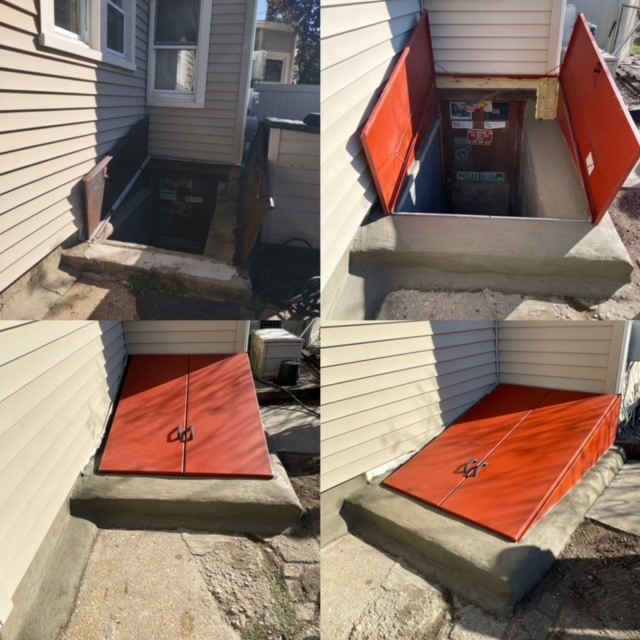
Bilco Door Installation CompanyBasement access is something most homeowners rarely think about until it becomes a problem. A rusted, stuck, or leaking basement entrance can turn a simple task, like carrying tools or firewood in and out, into a daily frustration. At Basements Love Us, we install and replace Bilco doors throughout New Jersey, Eastern Pennsylvania, and Delaware, giving homeowners a safer, drier, and more convenient way in and out of the basement.

What Is a Bilco Door?

A Bilco door, sometimes called a bulkhead door, is a sloped, angled exterior entrance that provides direct outside access to a basement, typically from ground level down a short set of stairs. Bilco is actually a well known brand name that has become synonymous with this style of basement entrance, similar to how people say facial tissue when they mean a specific tissue brand.

Signs Your Basement Needs a New Bilco Door

     • Rust has formed on the metal doors or frame

     • The doors no longer open, close, or lock properly

     • Water leaks into the basement through the door or stairwell during rain

     • The steps beneath the door are cracked, crumbling, or unstable

     • The old door no longer matches current safety hardware or weatherproofing standards

Benefits of a New Bilco Door Installation

Improved Basement Access

A properly functioning Bilco door means you no longer have to carry bulky items through the main living areas of your home. Lawn equipment, firewood, storage totes, and tools can move directly in and out through the basement entrance.

Better Protection From Weather

Older or damaged bulkhead doors are a common entry point for water, especially during heavy rain or snowmelt. A new, properly sealed Bilco door helps keep water out of the stairwell and away from your basement.

Increased Safety

New Bilco doors come with improved locking mechanisms and sturdier construction, reducing the risk of accidental injury from a stuck or collapsing door, and improving security for the home.

A Secondary Emergency Exit

In addition to daily convenience, a well maintained basement entrance can also serve as an additional way out of the home in an emergency, working alongside egress windows to improve overall basement safety.

What Goes Into a Proper Installation

Replacing a Bilco door is not as simple as swapping the doors themselves. A proper installation often involves inspecting and repairing the concrete stairwell beneath it, verifying that drainage is directing water away from the opening, and confirming that the new frame is sealed and anchored correctly to prevent future leaks.

Repair or Full Replacement?

Depending on the condition of your current entrance, a full replacement is not always necessary right away. In some cases, resealing the frame, replacing worn hinges and hardware, or repairing a cracked stairwell can extend the life of an existing Bilco door for several more years. A professional evaluation can help you understand whether a repair makes sense for your situation, or whether the age and condition of the unit point toward a full replacement being the more cost effective long term choice.

Bilco Door Installation From Basements Love Us

Basements Love Us specializes in basement and crawl space issues, making sure your home stays safe with Bilco Door Installation and Replacement, along with Waterproofing Services, Foundation and Structural Repairs, Mold Services, Water Damage Restoration, Basement Masonry, Exterior Drainage, and Egress Window Installation. We handle every part of the project, from stairwell repair to the finished, sealed entrance.

We are licensed, insured, and every job comes with a warranty for your peace of mind. With multiple offices throughout New Jersey, Eastern Pennsylvania, and Delaware, we offer free estimates so you can explore your options with no pressure. Contact Us Today to schedule your free inspection and upgrade your basement access today.

Egress Windows Explained: Why Your Basement May Need an Emergency Exit Window

14th, September | Uncategorized

Egress Windows Explained: Why Your Basement May Need an Emergency Exit Window

Egress Window Installation & Replacement in NJ, DE, PAIf you are finishing a basement, renting out a lower level bedroom, or simply thinking about safety, you have probably come across the term egress window. At Basements Love Us, we install and replace egress windows throughout New Jersey, Eastern Pennsylvania, and Delaware, and we often explain to homeowners why this feature is about far more than natural light. It is a critical safety requirement that can save lives in an emergency.
What Is an Egress Window?

An egress window is a window large enough, and positioned in a way, that a person can use it to escape the basement during a fire or other emergency, and that emergency responders can use to enter if needed. Unlike a standard basement window, an egress window must meet specific size, height, and opening requirements set by building codes.

Why Basements Need a Dedicated Emergency Exit

A finished basement often includes bedrooms, offices, or living spaces where people spend significant time, sometimes while others upstairs are asleep or unaware. If a fire blocks the stairwell, an egress window may be the only safe way out. This is why most building codes require an egress window in any basement that is used as a sleeping area or habitable living space.


Building Code Requirements for Egress Windows

While exact codes vary by municipality, egress windows generally need to meet a few common standards.

Minimum Opening Size

The window must open wide enough to allow a person to climb through comfortably, both in width and height, and must meet a minimum net clear opening area.

Sill Height

The bottom of the window opening, known as the sill, cannot be too high off the finished floor, so that someone can reach and climb through it without needing to stand on furniture.

Window Well Requirements

Because basement windows sit below grade, an egress window typically requires a window well outside, along with proper drainage so the well does not fill with water and defeat the purpose of the exit.

Benefits Beyond Safety

Natural Light and Ventilation

Egress windows are larger than typical basement windows, which means more natural light reaches the space, along with better airflow when the window is open.

Increased Home Value

A properly installed egress window can allow a basement room to legally be classified as a bedroom, which can increase both the usable space and the value of your home.

When to Consider an Egress Window Installation

     • You are finishing your basement into a livable space or bedroom

     • Your current basement windows are small, high on the wall, or difficult to open

     • You want to bring more natural light into a dark lower level

     • A home inspection or local code requirement has flagged the need for an egress window

     • You are simply prioritizing your family’s safety in the event of an emergency

Choosing the Right Location and Size

Not every basement wall is a good candidate for an egress window in its current form, and choosing the right location matters as much as choosing the right window. Factors like the depth of the foundation, the slope of the yard outside, existing landscaping, and where interior walls or plumbing run all play a role in determining the best placement. A qualified installer will evaluate these factors before recommending a location, so the finished window meets code, drains properly, and fits naturally into the room.

Egress Window Installation From Basements Love Us

Basements Love Us specializes in basement and crawl space issues, keeping your home safe with Egress Window Installation and Replacement, along with Waterproofing Services, Foundation and Structural Repairs, Mold Services, Water Damage Restoration, Basement Masonry, Exterior Drainage, and Bilco Door installation. Our team handles every step, from excavation and window well installation to the final finished opening.

We are licensed, insured, and every project comes with a warranty. With multiple offices across New Jersey, Eastern Pennsylvania, and Delaware, we offer free estimates to help you plan your project with confidence. Contact Us Today to schedule your free inspection and give your basement the safe emergency exit it deserves.

How Water Can Turn a Small Foundation Crack Into a Major Structural Problem

11th, September | Uncategorized

How Water Can Turn a Small Foundation Crack Into a Major Structural Problem

A hairline crack in your foundation wall might not seem worth worrying about, especially if it is dry and has been there for a while. But introduce water into the equation, and that small crack can begin a chain reaction that leads to serious structural damage. At Basements Love Us, we regularly meet with homeowners in New Jersey, Eastern Pennsylvania, and Delaware who wish they had addressed a small crack sooner, before water turned it into something much bigger.

Why Foundation Cracks Happen in the First Place

Concrete naturally develops small cracks over time as it cures, settles, and reacts to temperature changes. In many cases, these hairline cracks are cosmetic and stable. The trouble begins when water finds its way into that crack and does not stop.

How Water Expands the Problem

Freeze and Thaw Cycles

In our region, winters bring repeated freezing and thawing. When water seeps into a crack and then freezes, it expands, physically widening the crack. Each cycle of freezing and thawing pushes the crack a little further, weakening the surrounding concrete.

Erosion of Surrounding Material

Water moving through a crack slowly washes away small particles of concrete and the soil behind the wall. Over months and years, this erosion can create voids behind the foundation, removing the support the wall relies on.

Rust and Corrosion of Reinforcement

Many foundation walls contain steel rebar for added strength. When water reaches this rebar through a crack, it can cause rust, which expands and puts additional pressure on the surrounding concrete from the inside, leading to further cracking.

Increased Hydrostatic Pressure

Water that collects in the soil around your foundation creates hydrostatic pressure, a constant force pushing against the wall. A crack gives that pressurized water a direct path into your basement, and the flow often increases the size of the opening over time.

From a Small Leak to a Structural Emergency

Once water is consistently entering through a crack, the wall is more vulnerable to bowing, shifting, and crumbling. What started as a narrow line in the concrete can eventually become a wide gap, a bulging section of wall, or a section of crumbling masonry that requires significant structural repair.

Signs a Foundation Crack Is Getting Worse

  • The crack has visibly widened compared to when you first noticed it
  • Water is actively leaking or seeping through during rain
  • White chalky mineral deposits are forming around the crack
  • The wall near the crack feels soft, damp, or crumbly to the touch
  • You notice a musty smell developing in that area of the basement

Why DIY Crack Fillers Often Fall Short

It is tempting to grab a tube of hydraulic cement or masonry sealant and fill the crack yourself over a weekend. While this can offer a temporary cosmetic fix, it rarely addresses the pressure or moisture source causing the crack in the first place. Water is persistent, and it will often find a new path around a surface patch, sometimes reappearing through a different section of the same wall. A lasting repair usually needs to account for the water outside the wall, not just the opening it left behind.

Stop Small Cracks From Becoming Big Problems

Basements Love Us specializes in basement and crawl space issues, making sure your home stays safe through Waterproofing Services, Foundation and Structural Repairs, Mold Services, Water Damage Restoration, Basement Masonry, Exterior Drainage, and Bilco Door and Egress Window Installation and Replacement. Our technicians can determine whether a crack is stable or actively getting worse, and recommend the right repair before water does more damage.

We are licensed, insured, and every job comes with a warranty. With multiple offices throughout New Jersey, Eastern Pennsylvania, and Delaware, we offer free estimates so you can get answers without any obligation. Contact Us Today and let us help you stop a small crack from becoming a major structural issue.

What Happens If Basement Water Damage Is Left Untreated?

11th, September | Uncategorized

What Happens If Basement Water Damage Is Left Untreated?

A little bit of water in the basement does not seem like a big deal at first. Maybe it dries up on its own after a storm, and life goes on. But water rarely stays contained to one small area, and what looks like a minor issue today can quietly grow into a major problem. At Basements Love Us, we have seen firsthand what happens when basement water damage goes untreated, and it is a story we would rather help homeowners avoid than clean up after.

The Immediate Effects of Untreated Water

When water is left sitting in a basement, or when moisture continues to seep in without being addressed, the damage does not stay still. It spreads into flooring, drywall, insulation, and personal belongings stored nearby.

Damage to Building Materials

Drywall absorbs water quickly and begins to soften, warp, and eventually crumble. Wood framing and subflooring can swell, rot, and lose structural strength. Carpeting and padding trap moisture against the floor, creating a breeding ground for bacteria and odor.

Mold Growth Within Days

Mold spores are present in nearly every home, and they only need moisture and time to multiply. In many cases, visible mold growth can begin within 24 to 48 hours of water exposure. Once mold takes hold in porous materials like drywall or wood framing, it becomes much harder and more expensive to remove.

Long Term Structural Consequences

If basement water damage continues without intervention, the effects eventually reach the structural components of the home.

Weakened Foundation Walls

Repeated water exposure softens mortar joints and weakens concrete over time, contributing to crumbling walls, increased cracking, and in serious cases, bowing.

Compromised Support Beams and Joists

In homes with crawl spaces or wood framed basements, ongoing moisture can lead to wood rot in support beams and floor joists, threatening the stability of the floors above.

Decreased Home Value

A history of water damage, especially if left untreated, can significantly affect a home’s resale value and complicate future inspections or appraisals.

Health Risks for Your Family

Beyond the structure itself, untreated water damage creates health risks. Mold exposure has been linked to respiratory irritation, allergy symptoms, and worsened asthma, particularly in children and older adults. Musty odors circulating through the home are often a sign that air quality has already been affected.

Why Fast Action Matters

The longer water sits, the more expensive and invasive the repair becomes. What might have been a straightforward drying and waterproofing job can turn into a full restoration project involving structural repairs, mold remediation, and replacement of ruined materials.

The Hidden Costs of Waiting

Many homeowners underestimate how quickly costs escalate once water damage is left alone. A repair that might have involved drying out the space and sealing a single crack can turn into a project that requires replacing sections of drywall, refinishing flooring, treating mold across multiple rooms, and shoring up weakened framing. Insurance coverage can also become more complicated when damage is discovered well after the original water event, since some policies expect prompt mitigation. Addressing the issue quickly, even if it feels like an inconvenience in the moment, is almost always the more affordable path in the long run.

Trusted Water Damage Restoration From Basements Love Us

Basements Love Us specializes in basement and crawl space issues, keeping your home safe with Water Damage Restoration, Waterproofing Services, Foundation and Structural Repairs, Mold Services, Basement Masonry, Exterior Drainage, and Bilco Door and Egress Window Installation and Replacement. Our team responds quickly to stop the damage from spreading and restore your basement to a safe, dry condition.

We are licensed, insured, and provide a warranty on every job we complete. With multiple offices across New Jersey, Eastern Pennsylvania, and Delaware, help is never far away, and we always offer free estimates. Do not wait for a small puddle to become a major restoration project. Contact Us Today and let us protect your home before the damage spreads.

Cracked, Bowing or Crumbling Basement Walls: What Is Your Foundation Trying to Tell You?

11th, September | Uncategorized

Cracked, Bowing or Crumbling Basement Walls: What Is Your Foundation Trying to Tell You?

Cracked Basement Wall RepairA basement wall does not fail overnight. Long before a serious structural issue develops, the wall usually gives off small clues that something is wrong. Learning to read those clues can be the difference between a manageable repair and a major renovation. At Basements Love Us, we help homeowners throughout New Jersey, Eastern Pennsylvania, and Delaware translate what their foundation walls are trying to tell them, and take action before small problems turn into big ones.
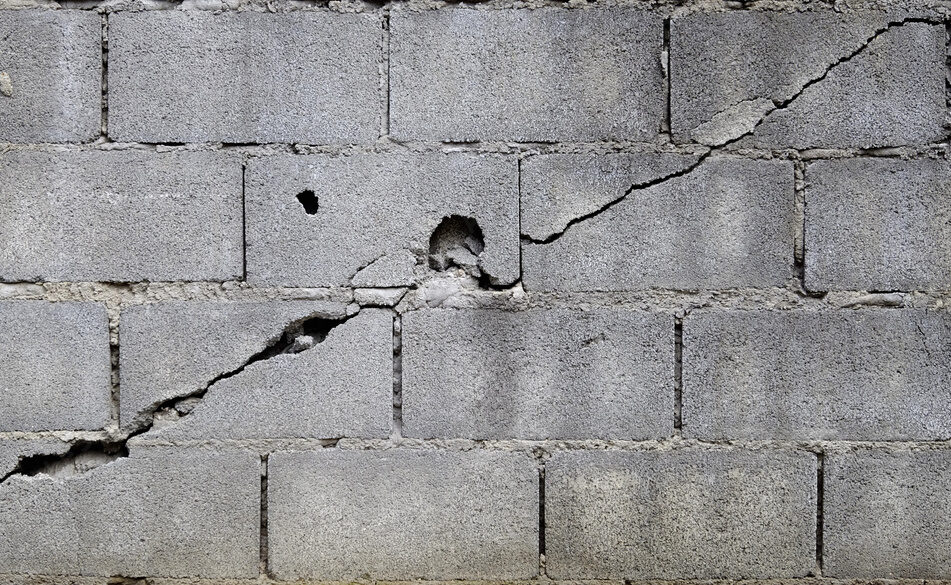
Cracked Walls: A Message About Pressure and Movement

Cracks are one of the most common signals a foundation sends, but not all cracks mean the same thing.

Vertical Cracks

These are often the least concerning type, typically caused by normal concrete shrinkage as it cures. However, if a vertical crack widens over time or begins leaking water, it deserves professional attention.

Horizontal Cracks

Horizontal cracks are a more urgent warning sign. They usually indicate that the soil outside the foundation is pushing against the wall with enough force to bend the concrete or block, a condition known as hydrostatic pressure.

Stair Step Cracks

Common in block foundations, these cracks follow the mortar joints in a diagonal, stair like pattern. They often point to settling or shifting somewhere along the foundation.

Bowing Walls: A Sign of Serious Outside Pressure

When a wall visibly bows or leans inward, it is telling you that the pressure against it has exceeded what the material can safely handle. This is frequently caused by saturated soil, poor drainage, or expansive clay that swells after heavy rain. Left unaddressed, a bowing wall can continue to shift, eventually leading to structural failure.

Crumbling Walls: A Sign of Long Term Water Damage

Crumbling or flaking concrete and mortar usually means moisture has been present for an extended period. Water works its way into the pores of the material, and repeated freeze and thaw cycles gradually break it apart from the inside out. By the time crumbling is visible, the damage often extends further into the wall than what can be seen on the surface.

Why You Should Never Ignore These Signals

It can be tempting to patch a crack with a tube of sealant from the hardware store and move on. Unfortunately, surface patches do not address the underlying cause, whether that is hydrostatic pressure, poor exterior drainage, or years of water infiltration. The wall will continue to send warning signs, often more severe ones, until the actual source of the problem is corrected.

When It Is Time to Call a Professional

A good rule of thumb is that any crack wider than a quarter inch, any wall that shows visible bowing or leaning, and any wall that is actively crumbling or leaking should be evaluated by a professional rather than monitored on your own. Even if the damage looks stable right now, an inspection gives you a clear picture of whether the wall is holding steady or continuing to shift, information that is nearly impossible to determine with confidence from a quick visual check. A trained technician can also identify the underlying cause, whether that is poor exterior grading, a failing gutter system, or long term hydrostatic pressure, so the repair actually solves the problem instead of just covering it up.

Listening to Your Foundation With Basements Love Us

Basements Love Us specializes in basement and crawl space issues, keeping your home safe through Waterproofing Services, Foundation and Structural Repairs, Mold Services, Water Damage Restoration, Basement Masonry, Exterior Drainage, and Bilco Door and Egress Window Installation and Replacement. Our technicians are trained to look past the surface and identify exactly what your foundation is dealing with. Learn more about our approach to Cracked, Crumbling, and Bowed Walls repair.

We are licensed, insured, and back every job with a warranty. With multiple offices throughout New Jersey, Eastern Pennsylvania, and Delaware, we make it easy to get expert help close to home, and we always offer free estimates. Contact Us Today and let us help translate what your foundation is trying to tell you before the message gets more serious.

7 Warning Signs of Foundation Wall Problems in Your Basement

11th, September | Uncategorized

7 Warning Signs of Foundation Wall Problems in Your Basement

Cracked Foundation WallYour foundation is the part of your home you rarely see, but it carries the weight of everything above it. Because it is often hidden behind drywall, paneling, or storage boxes, foundation wall problems can quietly develop for years before a homeowner ever notices. At Basements Love Us, we have inspected thousands of basements throughout New Jersey, Eastern Pennsylvania, and Delaware, and we know the early warning signs that most people miss. Catching these signs early can save you from a much larger, more expensive repair down the road.

1. Cracks in the Foundation Wall

Not every crack is a reason to panic, but the pattern matters. Vertical hairline cracks are often related to normal concrete curing, while horizontal or stair step cracks usually point to pressure building against the wall from the soil outside. Wide cracks, or cracks that continue to grow, are a sign that something structural is happening.

2. Bowing or Leaning Walls

If a basement wall appears to bend inward, or a level shows it is no longer straight, this is a serious warning sign. Bowing usually results from hydrostatic pressure, the force created when water builds up in the soil outside the foundation and pushes against the wall.

3. Crumbling or Flaking Concrete

When concrete or mortar begins to crumble, flake, or fall away in small chunks, moisture has likely been penetrating the material for some time. This deterioration weakens the wall and often gets worse with each freeze and thaw cycle.

4. Doors and Windows That Stick

When a foundation shifts, even slightly, it can throw off the alignment of the entire structure above it. Doors and windows on upper floors that suddenly stick, stop closing properly, or develop gaps are sometimes the first clue that a foundation issue exists below.

5. Gaps Around Windows or Door Frames

Similar to sticking doors, new gaps forming around window frames or exterior door frames can be a sign that the foundation is settling unevenly. This kind of movement should be evaluated before it affects the rest of the home.

6. Musty Odors or Visible Moisture

A persistent musty smell in the basement often means moisture is entering through cracks or porous walls. Where there is unwanted moisture, mold and mildew are usually not far behind, and both can affect indoor air quality throughout the home.

7. Uneven or Sloping Floors

If floors on the main level feel uneven, bounce slightly, or visibly slope, the support system beneath them, including the foundation walls, beams, or floor joists, may be compromised.

What to Do If You Notice These Signs

If any of these warning signs sound familiar, it is worth having a professional take a closer look before the issue grows. Foundation wall damage rarely improves on its own, and the earlier a problem is identified, the more options you typically have for repair.

Why It Rarely Pays to Wait

Homeowners sometimes hold off on scheduling an inspection because the crack looks small or the door only sticks occasionally. The trouble is that foundation problems are driven by ongoing forces, water pressure, soil movement, seasonal freezing and thawing, that do not pause while you wait. A crack that measures a sixteenth of an inch today can widen considerably after just one more wet season. A wall that shows the earliest hint of bowing can continue moving inward year after year until the shift becomes obvious from across the room.

Catching these seven signs early also tends to be far less disruptive to your home and your budget. Many early stage repairs can be completed in a day or two with minimal excavation, while a foundation that has been allowed to deteriorate for years may require more extensive work, additional bracing, or wall replacement. A simple inspection today can save you from a much larger project later.

Trusted Foundation Wall Repair Throughout NJ, PA, and DE

Basements Love Us specializes in basement and crawl space issues, making sure your home stays safe. Our team provides Foundation and Structural Repairs, Waterproofing Services, Mold Services, Water Damage Restoration, Basement Masonry, Exterior Drainage, and Bilco Door and Egress Window Installation and Replacement. We are licensed, insured, and every job comes with a warranty so you know the work is built to last.

With multiple offices throughout New Jersey, Eastern Pennsylvania, and Delaware, we offer free estimates to homeowners looking for honest answers about their foundation. Contact Us Today to schedule your inspection and get a clear plan for keeping your home safe and stable.